
Cities fall into two kinds: those that put themselves on display, and those that let you work them out. Zurich belongs firmly to the second kind. This is one of the wealthiest cities in Europe, and you could walk straight through it without suspecting a thing: no showing off, no hurry, hardly a raised voice anywhere. The trams run on time, the shopfronts stay sober, the fortunes keep quiet. The money is old and worn like a good coat, label on the inside. Which is precisely what makes Zurich so rewarding for those who know where to look.
That reserve has a happy consequence: Zurich is not so much visited as frequented. Its pleasures do not appear on brochures; they consist of a well-placed table, a walk along the water as the light goes, a seat at the opera. All things that gain considerably from being shared. It is in that spirit that we have long accompanied discerning gentlemen who wish to discover the city with an escort in Zurich, for a dinner or a weekend, with the discretion the place itself seems to require.
The practical essentials are on our dedicated Zurich page; here, we are concerned with the art of living. What follows is the city as we like it best: for two, unhurried, and never above a murmur.
The Lake Sets the Tempo
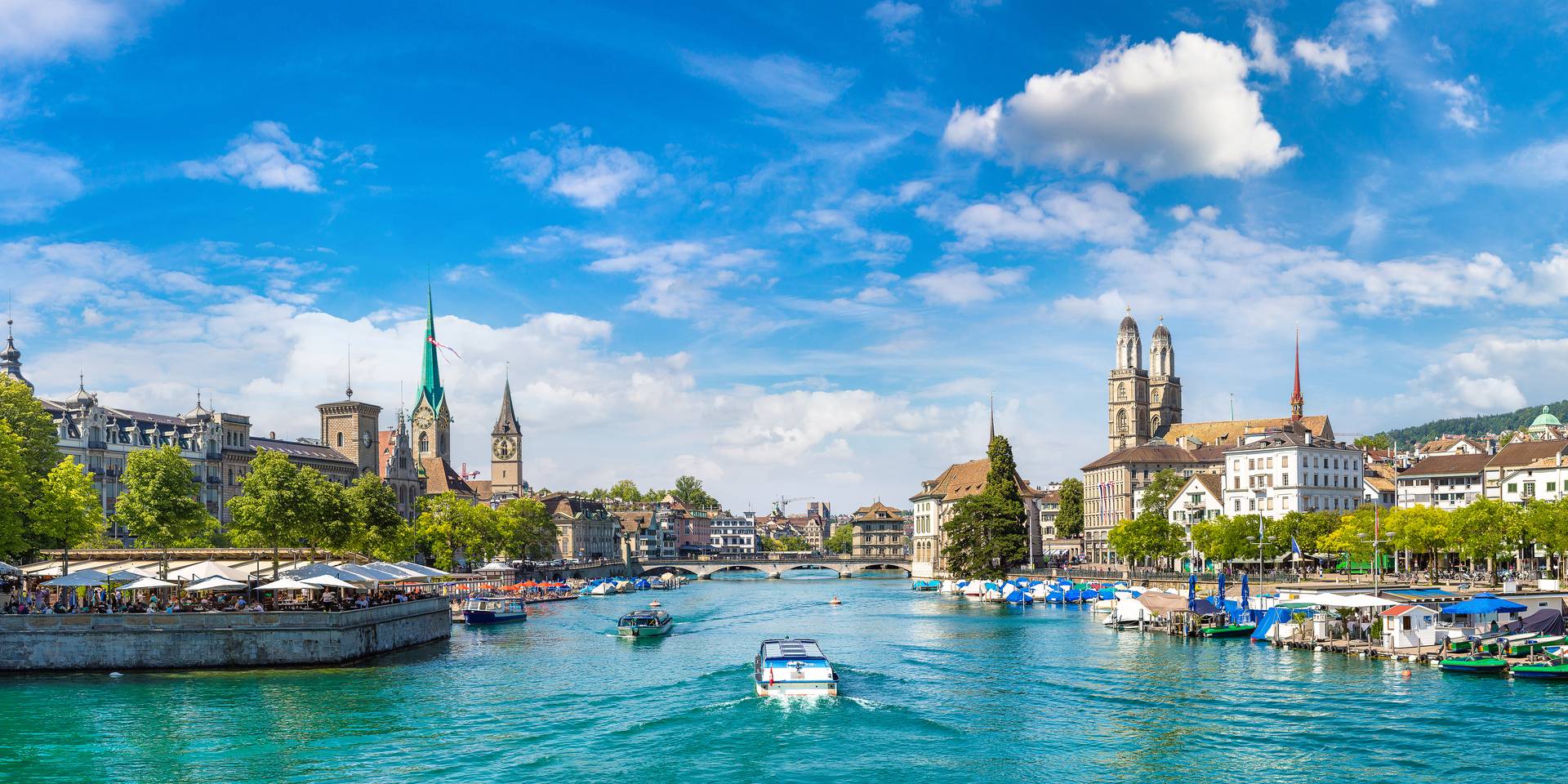
Everything in Zurich begins with the lake. It sets the tempo, and the tempo is unhurried. From Bürkliplatz, the quayside promenade runs towards the Zürichhorn, lined with trees, punctuated by benches and by swans who hold, like the rest of the city, a rather high opinion of their own standing. One passes early risers, gentlemen with all the time in the world, couples in no hurry to find any. One walks without any particular destination, and that is entirely the point.
The white boats of the ZSG leave the Bürkliplatz landing throughout the day. The one-hour cruise is enough to take the measure of the shoreline and its villas; the two-hour loop carries on to Rapperswil at the far end of the lake. Choose the late afternoon: the light settles on the water, the Alps stand at the horizon, and the conversation no longer needs any help. The return leg comes at dusk, as the city lights itself one window at a time, without ever glittering. Few cities offer a tête-à-tête so easy to arrange and so difficult to forget.
In summer, the whole city goes swimming. From May to September the lakeside baths become open-air drawing rooms, where bankers and students cross paths in swimwear with the same disarming ease:
- Seebad Enge, set on stilts facing the Alps, where guests tend to linger well into the evening;
- Seebad Utoquai, across the water, with its old wooden cabins;
- Strandbad Mythenquai, larger and greener, very nearly a beach.
You soon understand that the Zurichers have nothing to prove. They have the lake.
At Table, Without the Theatre
Fine dining in Zurich resembles the city itself: excellent, and not much given to talking about it. Nowhere is this clearer than at the Kronenhalle, an institution in the Bellevue quarter since 1924. The kitchen serves classic dishes beneath real Picassos, real Chagalls, Mirós, Matisses and Bonnards. Not reproductions hung for atmosphere: the collection of Gustav Zumsteg, the collector who displayed his paintings here, and some of the artists, so the story goes, settled their bills in canvases.
The remarkable thing is not the collection but the composure of the room beneath it. Diners order, talk, and barely glance at the Chagall above the banquette. Nobody makes a fuss. Dinner among masterpieces, treated as perfectly ordinary: that, in a single image, is Zurich's idea of luxury.
The rest of the city keeps the same modesty. A hushed dining room in the old town, a small table by a window over the Limmat, a vaulted cellar where the service anticipates rather than asks: Zurich excels at addresses that make no effort to be seen. We shall not list them; half the pleasure lies in being taken. A successful dinner here is one the next table never hears.
Culture and Evenings
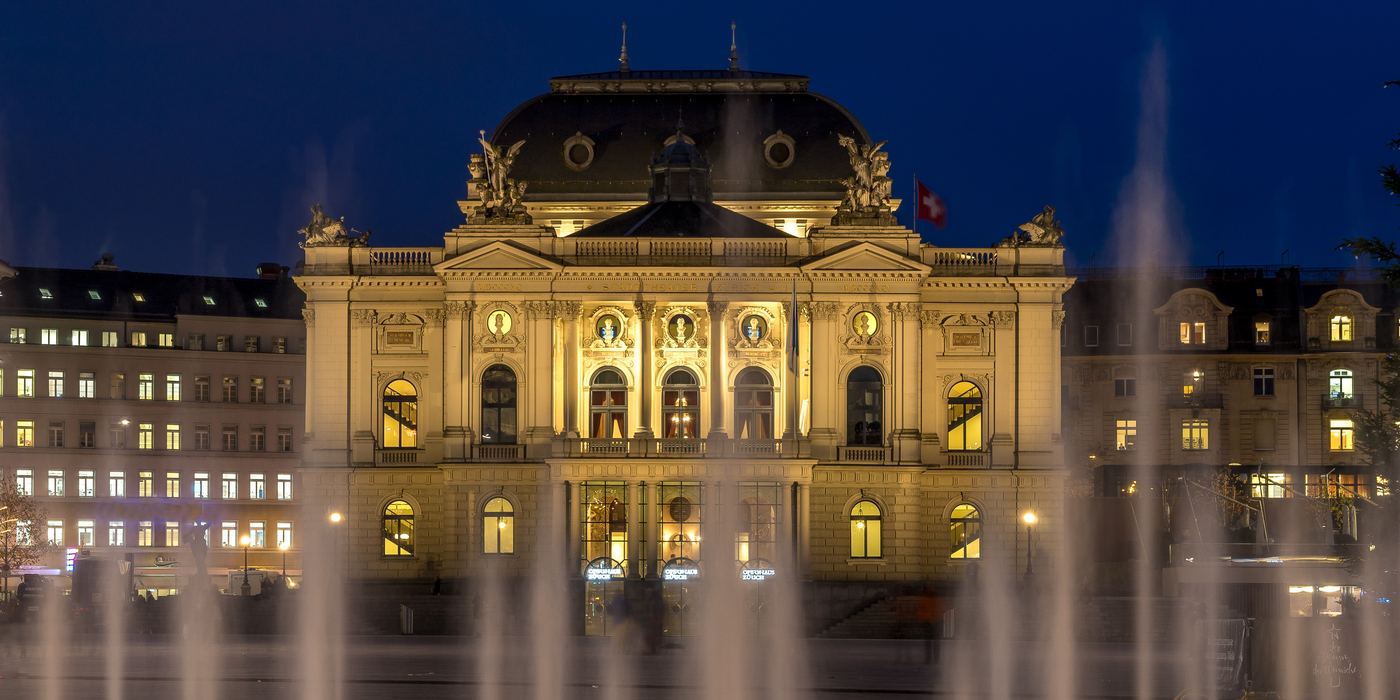
Come evening, Zurich reveals itself without strain. The Opernhaus sits at the edge of the lake, on the fringe of the old town, and offers a dense programme in a house of human proportions: close to the stage, close to the pit. And the walk out onto the square on a mild night extends the performance better than any interval. Concert-goers may prefer the Tonhalle, opened by Brahms in 1895 and blessed with one of the finest acoustics in the world. One leaves reluctant to speak too soon. Book early: reserved as they are, the Zurichers do not let a fine cast slip past.
Then cross into the old town. The Niederdorf unwinds its cobbled lanes, its old signs, its cellars and counters, rather more playful than the city's sober reputation suggests. This is where the last drink lives, the one never decided in advance: a quiet bar, two armchairs, a conversation that declines to end. In winter you take refuge there; in summer you linger, and nobody dreams of hurrying you.
As for the Bahnhofstrasse, the great names of watchmaking and jewellery keep their windows there. One strolls down it in passing, pauses if the mood takes, and makes no pilgrimage of it. Zurich prefers parentheses to itineraries.
Where to Unpack
Zurich's grand hotels have the good taste to live up to their city. The Baur au Lac, open since 1844, receives its guests in a private park facing the lake and the Alps; the same family has kept it for seven generations, which perhaps explains why it feels less like a hotel than a home. Within these walls, or so it is said, the idea of the Nobel Peace Prize took shape; and it was here, in 1856, that Wagner gave a private performance of excerpts from the Valkyrie, years before it reached the stage. A private park in the middle of the city: there is a luxury money no longer buys. The house is used to guests of consequence, and, more valuable still, used to not showing it.
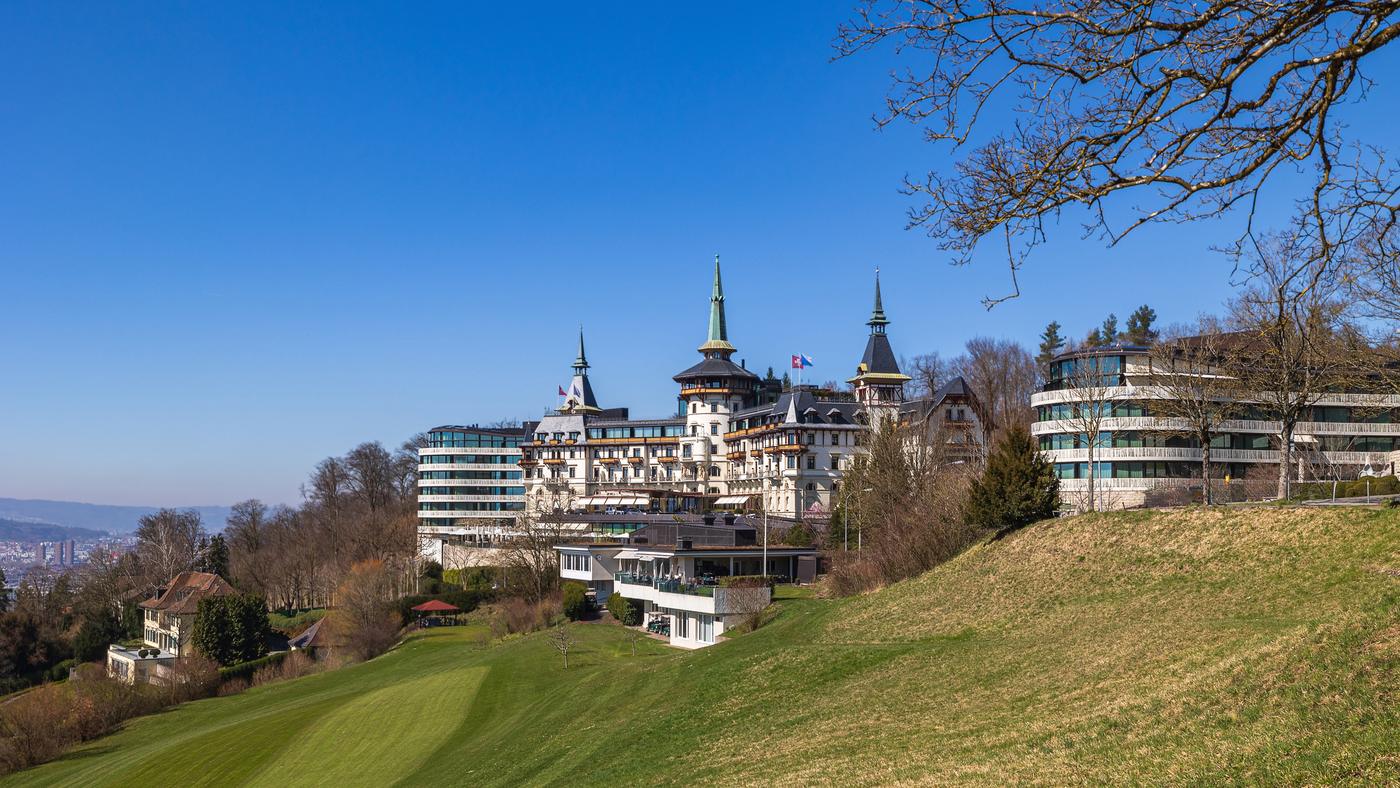
Up on the Zürichberg, the Dolder Grand watches over the city and the lake, minutes from the centre yet already in the quiet, with a sumptuous spa by Norman Foster in which entire afternoons disappear without protest. One goes up for the spa and stays for the view. Two styles, one certainty: you are in the right place.
Wherever you choose to stay, the Felines come to you: your escort in Zurich joins you at the agreed hour, with the ease of an expected guest; and should your diary take you elsewhere, she can just as well travel to you. Such houses have the grace to see everything and notice nothing, and it is there, perhaps more than in the marble and the fresh flowers, that a grand hotel gives itself away.
Zurich, for Two
Zurich rewards those who take their time, and time is best taken in company. A walk along the quays, dinner beneath a Chagall, an evening at the opera: such pleasures change texture entirely when shared. The right presence changes a city; above all, it changes how you remember it. Our escorts, cultivated, elegant and perfectly at home in these surroundings, understand the measure of it: present without weighing, engaging without familiarity.
If Zurich is on your calendar, write to us. We will arrange your booking with the care and discretion the city itself will have taught you to expect.
Further reading
- Zurich Tourism, the official city guide. zuerich.com
- Kunsthaus Zürich, Switzerland's largest art museum. kunsthaus.ch
- Opernhaus Zürich, the Zurich opera house. opernhaus.ch