

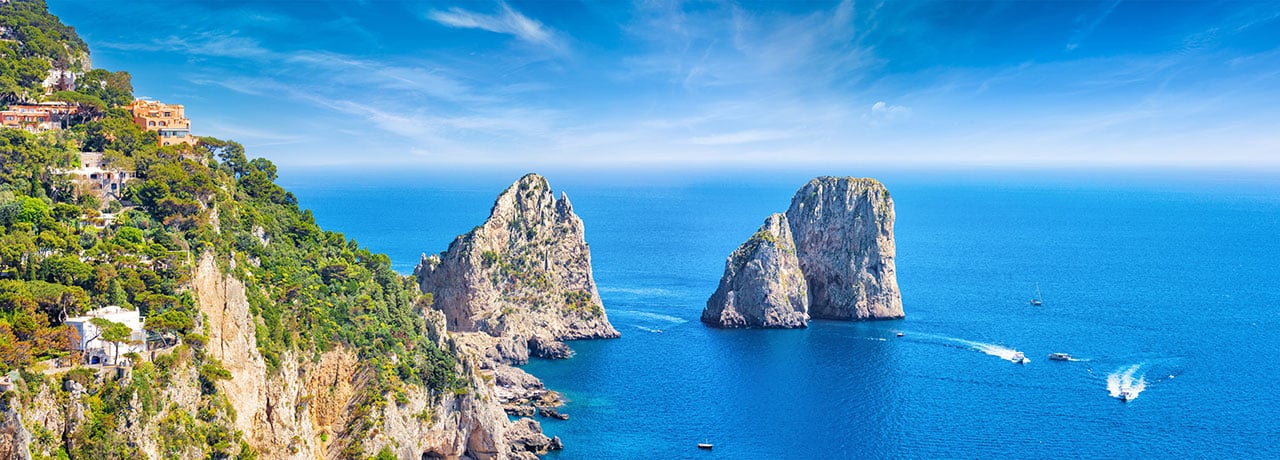
An escort in Capri is arranged by Felines, an agency of high end escorts working internationally, and always as an outcall date: your companion meets you at the hotel, or at the villa you have taken for the season.
The island is small, steep and governed by the sea. Almost every visitor lands at Marina Grande, climbs by funicular to the Piazzetta, then goes higher still, to the paths of Tragara or to Anacapri. Our clients come for a long weekend, a few days on a yacht anchored offshore or a summer stay, and Capri asks for a little organisation: the ferries and hydrofoils from Naples or Sorrento set the rhythm, and most of the grand hotels open in spring and close in late October.
The guide below follows the climb, starting at the water's edge and ending in Anacapri, almost three hundred metres above the gulf.
Capri has two harbours facing two different seas. Marina Grande, on the north side, receives the boats from the mainland; Marina Piccola, on the south side, is where the island goes to swim.
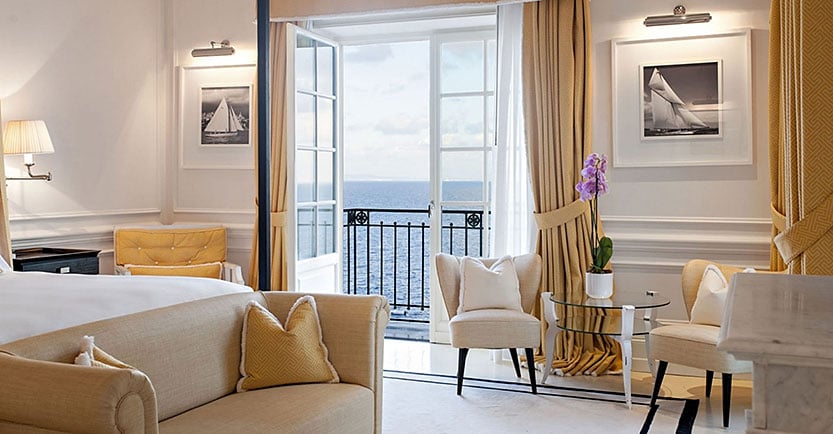
Above Marina Grande, on the Via Provinciale, J.K. Place occupies a whitewashed villa of twenty-two rooms, with terraces facing the Gulf of Naples and Vesuvius. It is the closest of the grand hotels to the port, which counts when you arrive with luggage, and it is run in the manner of a family home rather than a hotel.
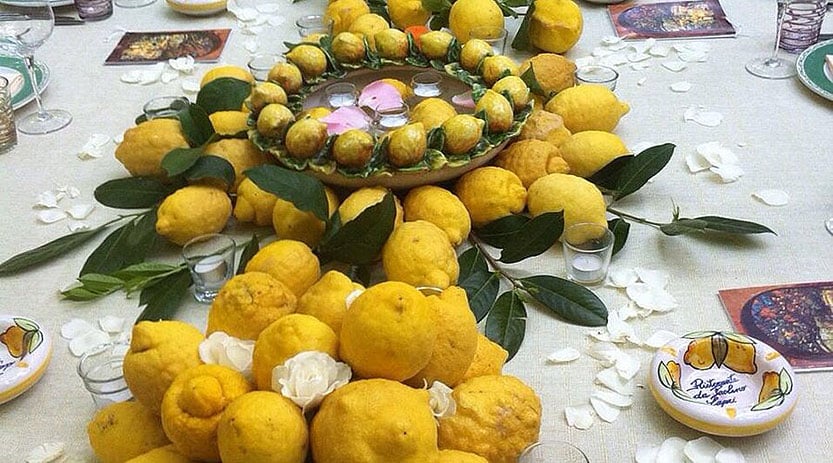
A short walk east of the harbour, on the Via Palazzo a Mare, Da Paolino serves dinner under a grove of lemon trees. The cooking is simple and generous, and the setting alone justifies booking well in advance.
From the harbour, the funicular reaches the Piazzetta in about four minutes. It does not run from January to Easter, when taxis and buses take over.
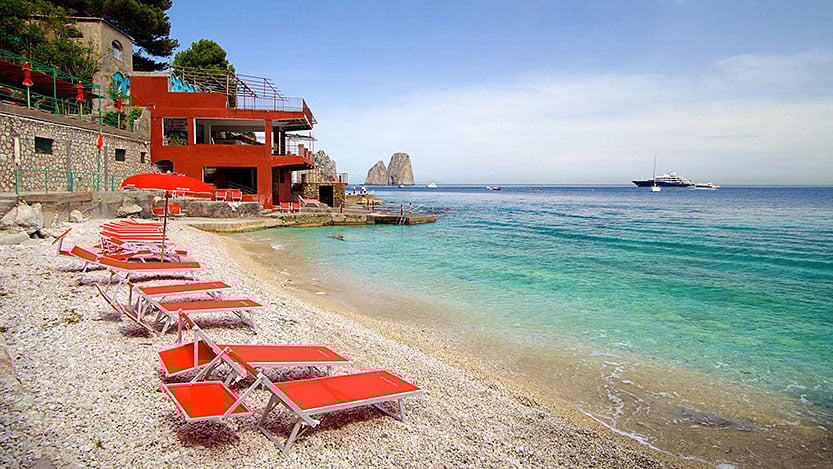
On the other side of the island, Marina Piccola is a cove of pebbles and coarse sand, sheltered by the rocks and lined with beach clubs. The water is clear enough to make the swim the highlight of the day.
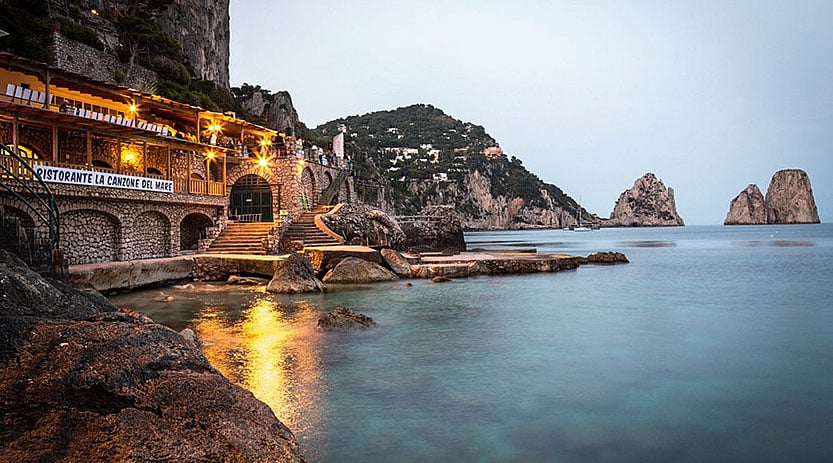
La Canzone del Mare was opened in the 1950s by Gracie Fields, the English singer who had made Capri her home. Its terrace above the sea still fills at lunchtime, and the place keeps something of the island's postwar glamour.
The Piazzetta, properly the Piazza Umberto I, is the meeting point of the whole island. Its cafés face each other across a few square metres, and the lanes around it lead to the hotels, the boutiques and the gardens.
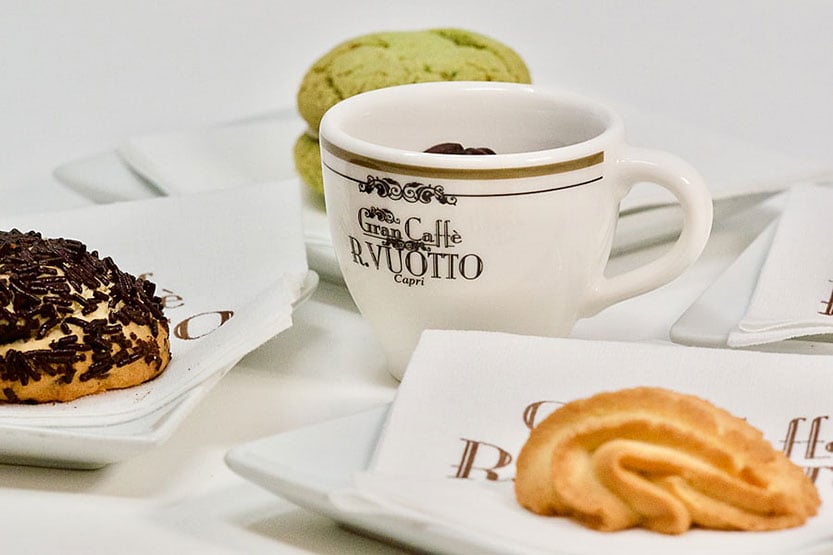
The Gran Caffè, on the Piazzetta itself, is the place to sit towards six, when the day visitors have left and the island returns to those who sleep on it.
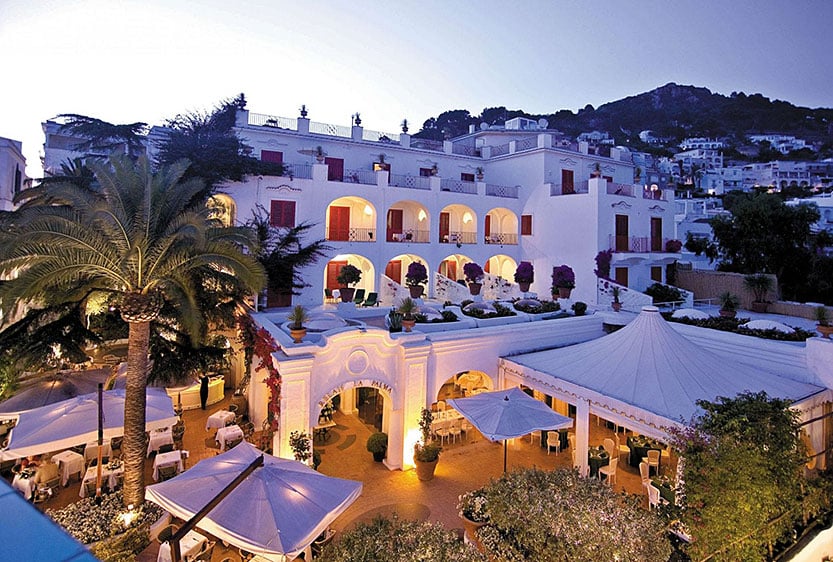
On the Via Vittorio Emanuele, La Palma occupies a building of 1822, restored for the Oetker Collection by the designer Francis Sultana. Its beach club at Marina Piccola is open from May to mid-October, and in 2026 the hotel opened a restaurant, Casa Tua, and a rooftop, Bianca, for the summer months.
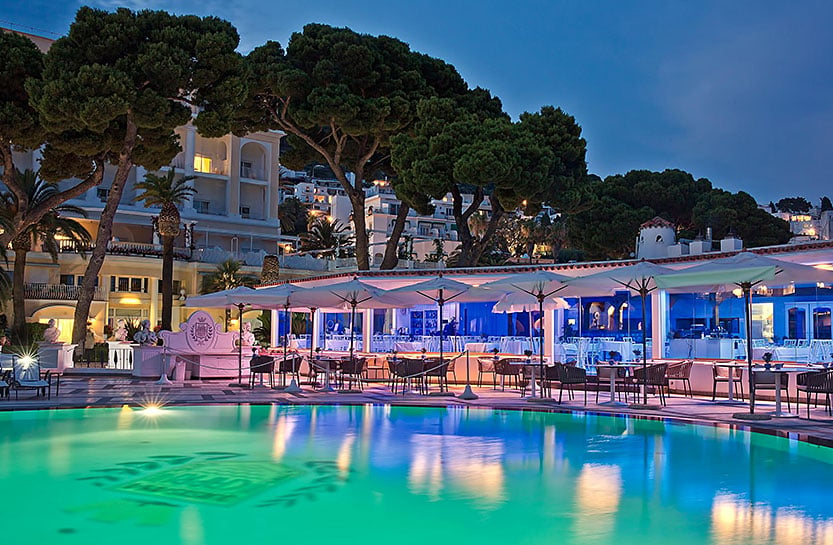
The Quisisana began in 1845 as a sanatorium, which explains its name, "here one heals". Today it counts 148 rooms, a spa and gardens, just off the Piazzetta.
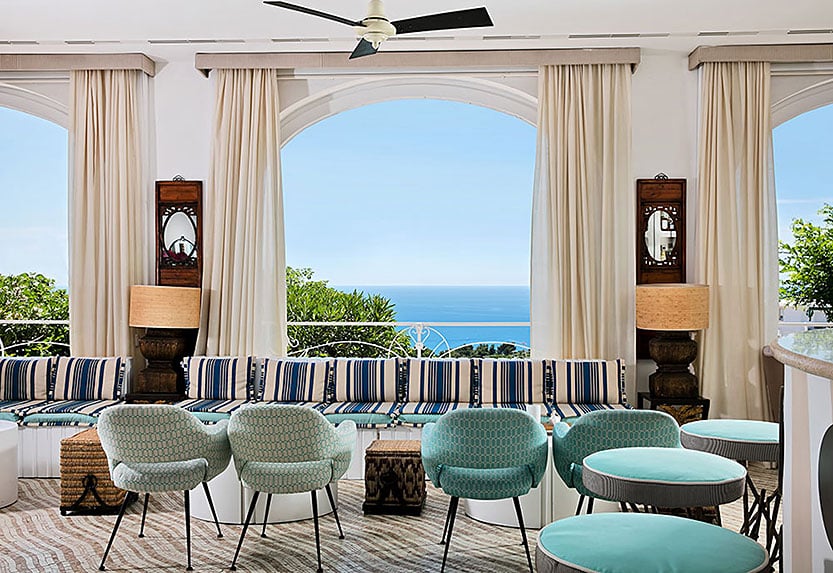
At the Capri Tiberio Palace, the Jacky Bar is built around a white piano, in a style that recalls the island of the 1950s. An evening there starts quietly and often ends later than planned.
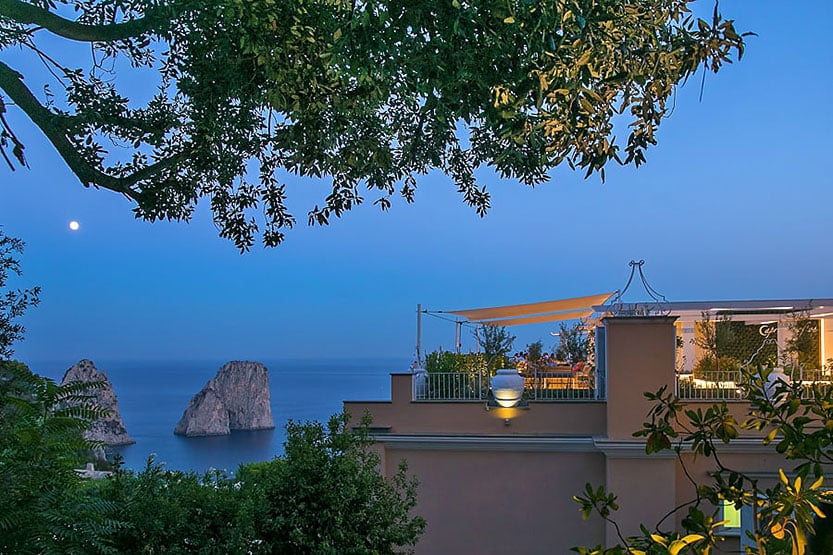
Above the Hotel Luna, Capri Rooftop serves drinks with a view of the sea. Sunset is the moment to go up, before dinner.
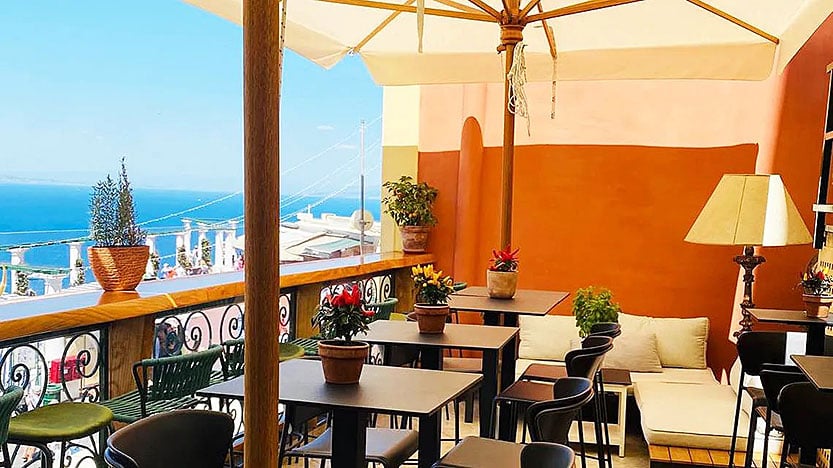
Salotto Bohemien is a small, relaxed wine bar with about a hundred and eighty labels on its list. It suits the end of an evening better than its beginning.
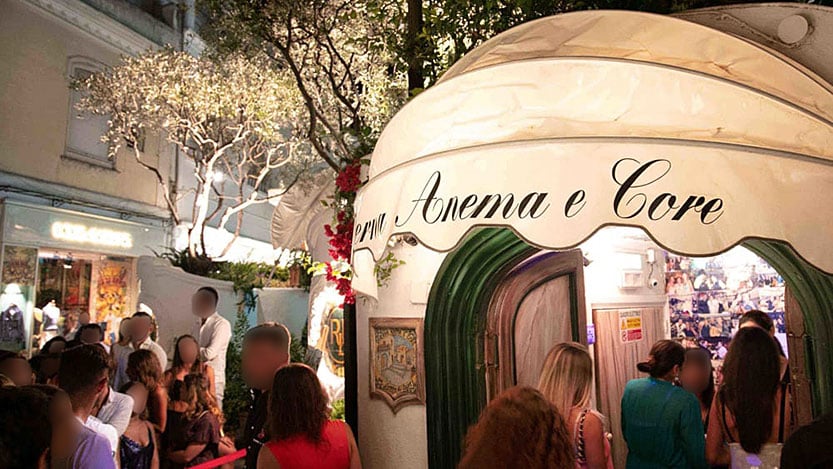
On the Via Sella Orta, Anema e Core has been open since 1994: a taverna that works as a club, with live music and an evening that only gets going late. Book a table if you would rather watch than dance.
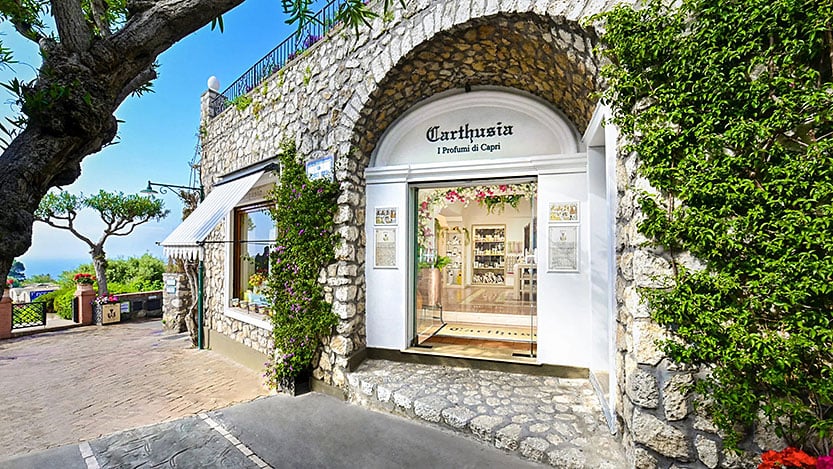
Carthusia was founded in 1948, when the prior of the Certosa di San Giacomo brought old perfume formulas back to light. Its scents draw on the flowers and herbs of the island, and a bottle makes a discreet present to take home.
South of the town, the paths become quieter. They lead to the gardens above the sea, to the Punta Tragara and to the three rocks that every photograph of Capri seems to include.
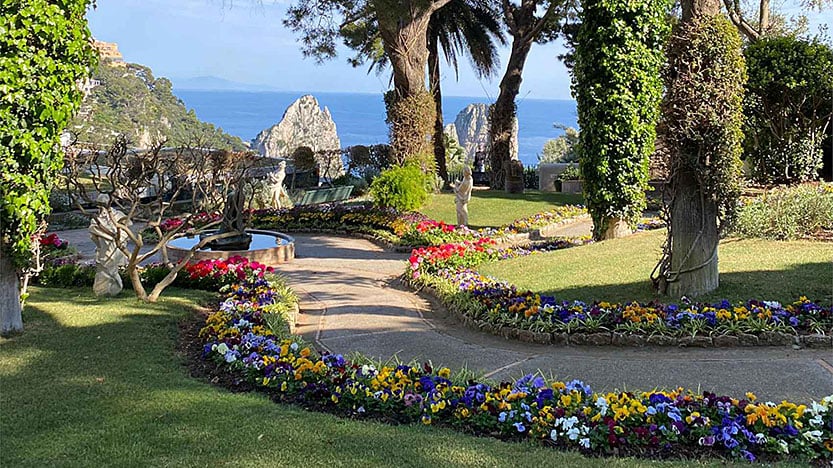
The Gardens of Augustus are laid out in terraces above the sea, with a view of the Faraglioni and of Marina Piccola below. From there, the Via Krupp zigzags down the cliff to the water; reopened in 2023, it is closed again for now because of the risk of falling rocks, so admire it from the gardens above.
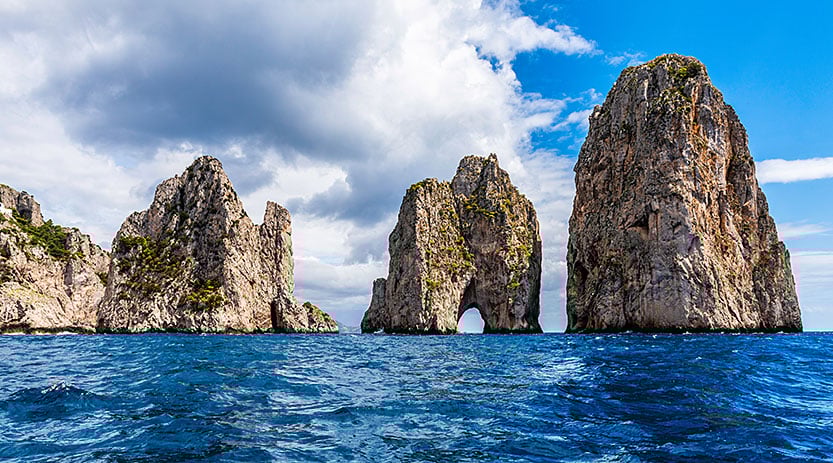
The Faraglioni are three rocks rising straight out of the sea off Tragara. They can be seen from the paths above, but the most striking view is from a boat, passing through the arch of the middle rock.
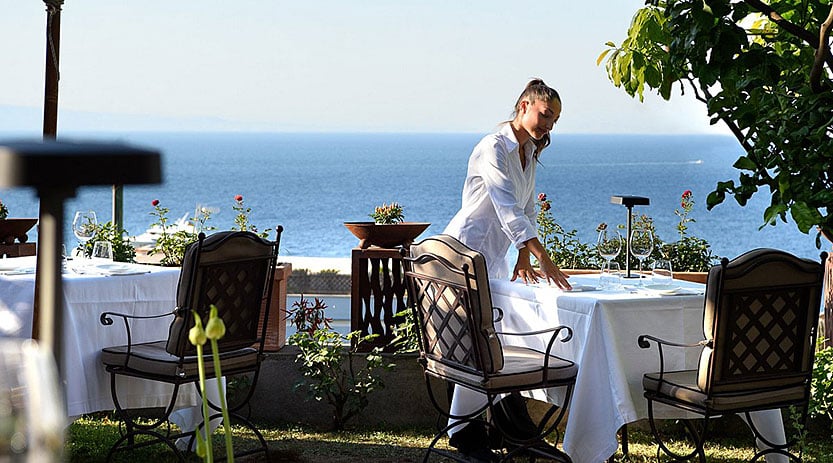
At the Punta Tragara hotel, which reopened on 2 April 2026 after a refurbishment that preserved its Roman mosaic, Le Monzù holds one Michelin star. Antonio Pedana's cooking draws on the sea and the gardens of Campania, and the terrace faces the Faraglioni.
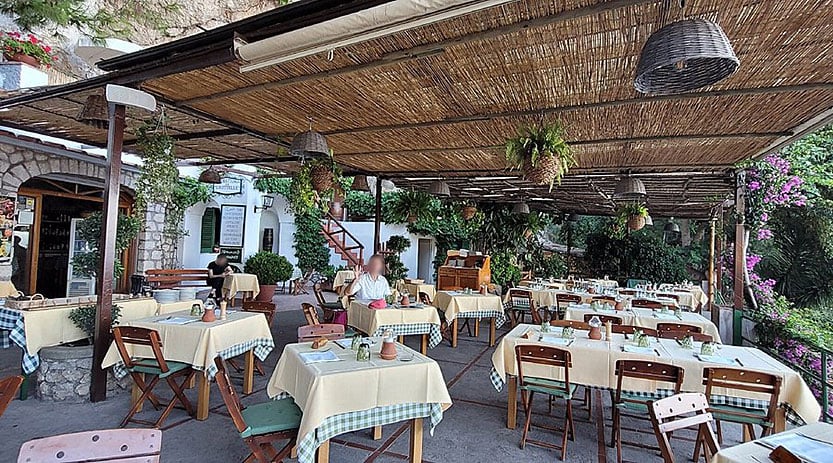
Further along, on the Via Arco Naturale, Le Grottelle is set against the rock, near the natural arch that gives the street its name. The fish is grilled simply and the view does the rest. It is closed on Tuesdays.
Anacapri, the island's second village, sits on the plateau to the west, quieter and greener than Capri Town. Its hotels look down on the whole Gulf of Naples, and its side of the coast holds the island's most famous cave. The Villa San Michele, built by the Swedish doctor Axel Munthe, is also here.
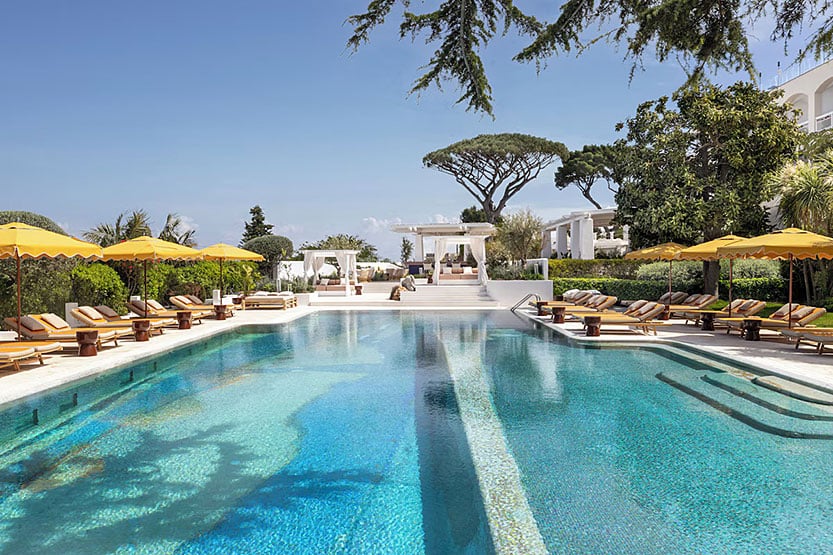
The Jumeirah Capri Palace reopened on 16 April 2026 for a new season. The hotel has a spa, a collection of contemporary art and, by the sea, the Il Riccio beach club, which this year carries the colours of Dioriviera.

L'Olivo, the hotel's restaurant, is the only table on the island with two Michelin stars. It is the address for a dinner that marks an occasion, and a reservation well ahead is wise in high season.
The Caesar Augustus, a member of Relais & Châteaux, stands right at the cliff's edge, some three hundred metres above the gulf. Its fifty-six rooms and its infinity pool seem to hang over the water, and the view reaches Vesuvius on a clear day.
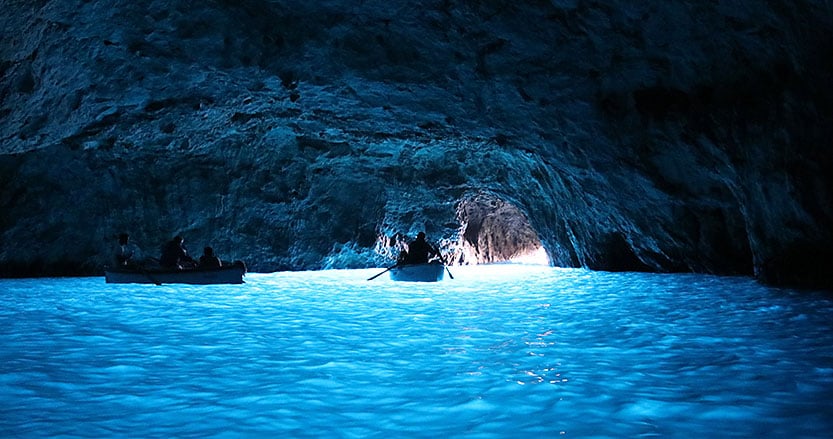
The Blue Grotto lies below the cliffs on the Anacapri side. Visitors enter it lying back in a small rowing boat, through an opening barely higher than the water, and the light inside turns the sea a vivid blue. In 2026 the island marks two hundred years since its rediscovery in 1826. The cave closes when the sea is rough, and in October visits run from nine to four, weather permitting.
A date on Capri usually means a companion travelling to the island, and she will generally stay at least one night. Allow at least 48 hours of notice, more in July and August, so that the crossing can be organised; the ferry or hydrofoil is part of the travel costs, which are always charged in addition to the fee. She can join you at the hotel, at the villa or, once agreed with the agency and with her, to a yacht. Why we work only outcall is explained in this article on incall and outcall.
Fees vary with the duration and with the companion; the full grid is on the rates page. Pick a companion in the gallery, or tell the agency about your stay and let us suggest the right person. When your dates on the island are confirmed, get in touch.

