


Ask the question over dinner: what is a courtesan? The answer arrives at once, and it is short: "a high-class prostitute". Dictionaries dispatch her in a single line, and dictionaries have never been very good at people. We think that definition misses everything that matters, and does a quiet injustice to some of the most remarkable women history has produced.
For the better part of twenty-five centuries, in societies that kept their "respectable" wives away from public life altogether, the courtesan was the one woman permitted to be educated, witty, independent and visible. Men crossed seas for her conversation. Poets dedicated verses to her, painters competed for her portrait, statesmen sought her judgement. Desire was part of the equation, no one disputes it; it has never been enough to explain her legend.
That is the history we want to tell here, from Athens to Venice, from Edo to the Paris of the nineteenth century, and on to what remains of it today. It is a finer story than its caricature, and a far more instructive one.
From the Court to the Word
The word itself did not come from the street; it came from the palace. Renaissance Italian called the man of the court a cortigiano, and formed its feminine quite naturally: cortigiana, the lady of the court. From there, as the etymological record1 confirms, French drew courtisane, and English took up "courtesan" in the 1540s. At the root sits the corte, the court, and behind it the Latin cohors: the retinue, the circle around power.
The two words then led very different lives, and the contrast carries the whole story. The masculine made a career in politics: the courtier flatters, manoeuvres and waits. The feminine took another road, and soon described women who held a place beside the powerful that nothing official acknowledged: present at the feasts, part of the conversation, admitted where wives were not. The true meaning of courtesan, in other words, was never built on commerce. It was built on the court: proximity to power, polish, ease among people of consequence. Language, for once, put the emphasis in the right place.
Ancient Greece: The Hetaira
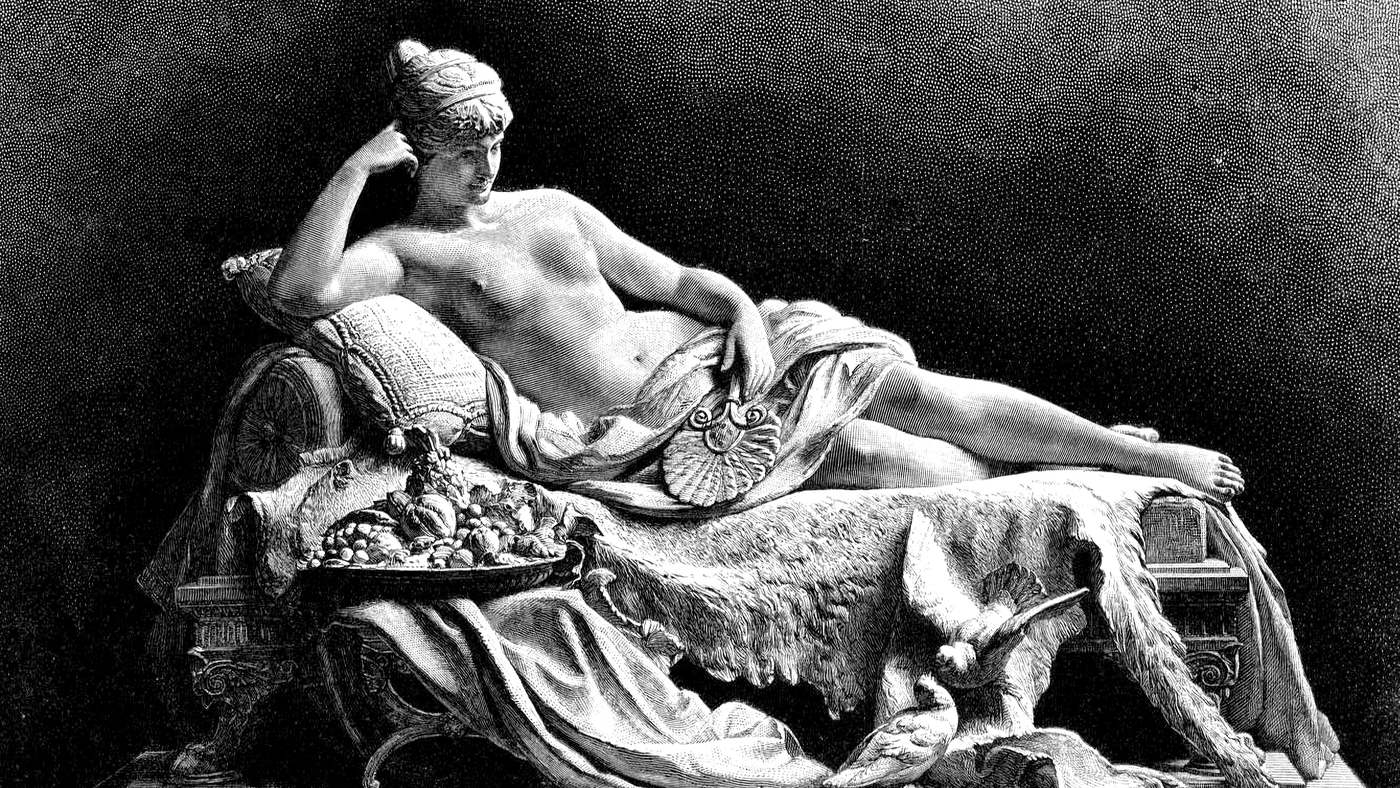
Athens in the fifth century BC offered the respectable woman a simple horizon: the women's quarters. A citizen's wife went out rarely, received no one and attended no banquet; her virtue was measured by her invisibility. Yet the banquets took place, and wit circulated there along with the wine. One woman had her seat at them, and the Greeks named her with disarming candour: hetaira, the companion.
The classicist James Davidson devoted a modern classic to that world, Courtesans and Fishcakes2, and the distinction he restores there is essential. The pornē sold an act at a posted price; the hetaira gave, or withheld, her company. She dealt in time rather than transactions, in gifts rather than fees; she chose her attachments, and she kept ambiguity alive with consummate skill. She was lettered, musical and formidable in an argument: the one woman in Athens with whom a man could dine while talking philosophy.
The most illustrious of them was not even Athenian. Aspasia came from Miletus and shared the life of Pericles, the first man of the city. The comic poets mocked her, which was the Greek tax on celebrity; Plutarch records that Socrates came to hear her talk, bringing his pupils with him. Historians still debate her precise status, and the debate rather misses the point: she remains the woman of her century whom Athens remembered for her mind rather than her silence.
Venice: The Honest Courtesan
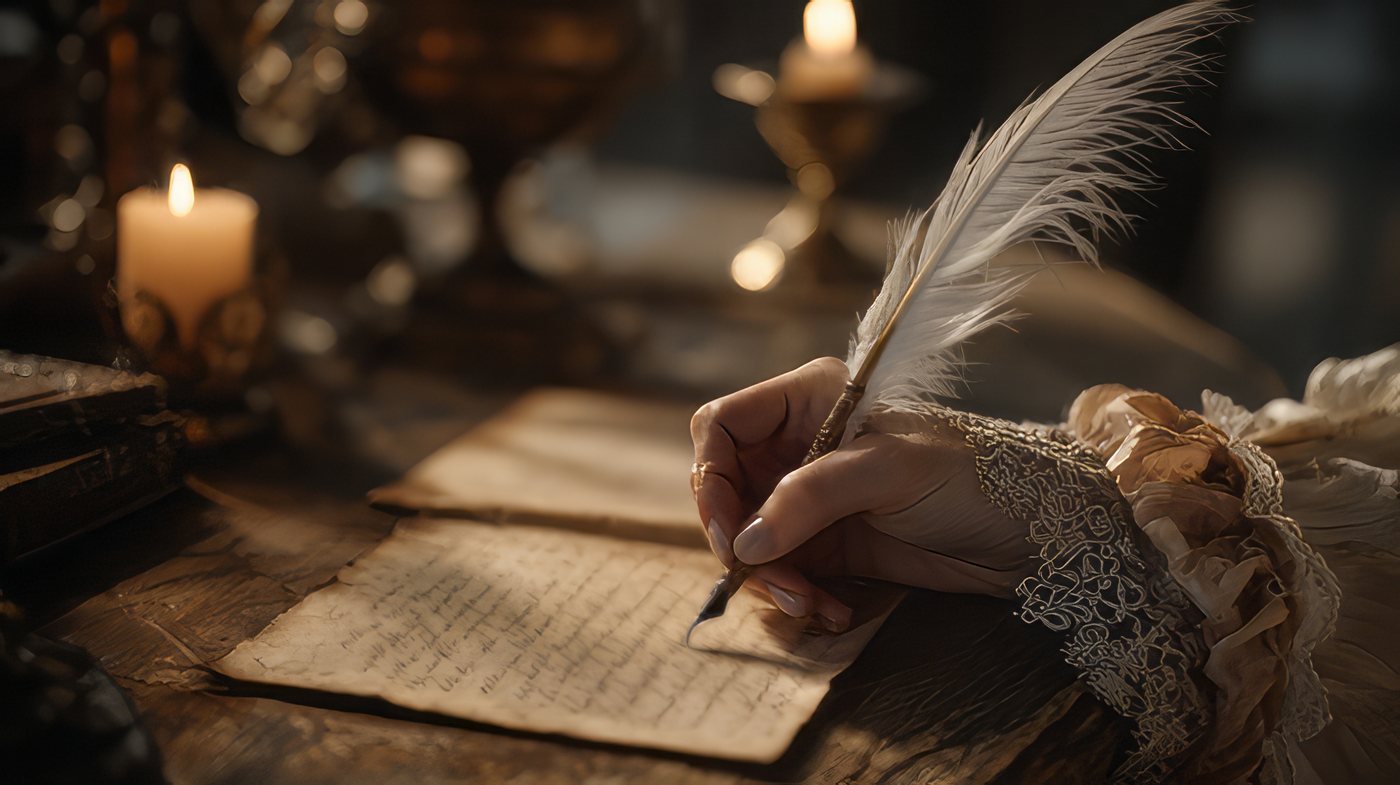
Two thousand years later, Venice gave the figure its most startling title: cortigiana onesta, the honest courtesan. Honest not in the drawing-room sense the word carries today, but in the older one: honoured, esteemed, received. In the richest republic in Europe these women read Latin, played the lute and kept salons; a few of them published, and there lies the marvel.
Veronica Franco, born in 1546, was a poet before she was a legend. She published her Terze rime in 1575 and her letters in 1580; she belonged to the literary circle at Ca' Venier, one of the most demanding in the city; when Henri III of France passed through Venice in 1574, it was her company he sought, and she dedicated two sonnets to him. Summoned before the Inquisition in 1580, she conducted her own defence, and the charges collapsed. The historian Margaret Rosenthal gave her biography a subtitle that captures the splendid anomaly: The Honest Courtesan3, citizen and writer. To the men of her age, Franco addressed verses that are quoted to this day:
"When we too are armed and trained, we can convince men that we have hands, feet, and a heart like yours."
Nor was she alone. Tullia d'Aragona, courtesan and philosopher, published a Dialogue on the Infinity of Love in 1547 that universities still argue over. And Franco herself, at the height of her renown, petitioned the city's government to found a refuge for women in need: a singular use of celebrity, for a "high-class prostitute". That is what the Venetian courtesan was: not an ornament of the palaces, but an intellectual the palaces competed for. Nowhere else has companionship stood so close to literature.
The East: The Oiran and the Geisha
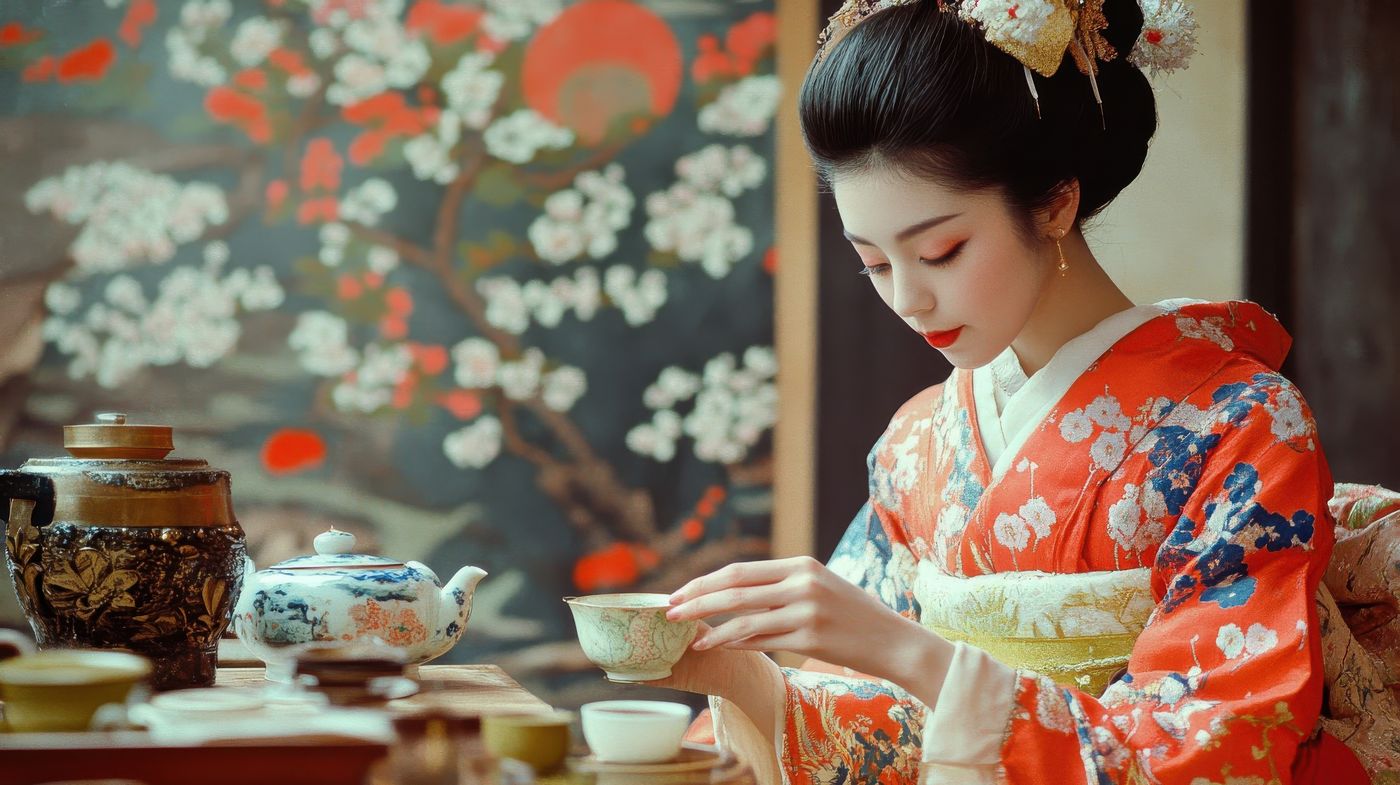
The same pattern flowered at the other end of the world, with the ceremonial refinement of Edo-period Japan. In the licensed quarter of Yoshiwara, whose glittering world4 the historian Cecilia Segawa Seigle has reconstructed, the hierarchy of courtesans culminated in the oiran. Calligraphy, poetry, the tea ceremony, music: her training took years. Her processions through the quarter stopped the crowds; her etiquette was so exacting that a suitor, however wealthy, had to meet her three times before he could hope for anything warmer than tea, and she kept the right to turn him away altogether. Ancient India had known an equivalent of its own: the ganika, versed in the sixty-four arts catalogued by the Kama Sutra and honoured in her city for her accomplishments.
Here the most stubborn misunderstanding of all needs clearing away: the geisha is not a courtesan. The geisha appeared in the eighteenth century as a professional artist, the word itself meaning "person of the arts": dance, music, conversation. Regulation expressly forbade her to compete with the courtesans of the quarter; she dressed more plainly, wore her hair differently, and sold her art and nothing else. Turning the geisha into a sex worker is a mistake Japan has been patiently correcting for a century; the line between courtesan and artist was, on the contrary, one of the sharpest in Edo society.
The Common Thread
Athens, Venice, Edo: three worlds with no knowledge of one another, and three times the same figure. That is not coincidence; it is something close to a law. Wherever a society locked its "respectable" women away, in the gynaeceum, the palazzo or the home, it invented alongside them a woman of exception to whom everything denied the others was permitted: study, the conversation of men, financial independence, a public existence.
This is our conviction, and the heart of this essay: the courtesan was never defined by venality, which every age has known and kept in the shadows. She was defined by a monopoly, the monopoly of female freedom. Society paid handsomely, in her company, for the very thing it had forbidden at home: a woman's mind at liberty. Measure the paradox: those jealous centuries entrusted their freest conversations to the only women they refused to marry.
The legend, though, does not tell the whole story. The women whose names history kept were a handful; for every Veronica Franco, a thousand others left neither verse nor portrait, and lived hard lives with no protection and no assured tomorrow. What we celebrate are her survivors, and they shone above a reality far darker, and far more common.
None of this should be gilded. Her freedom was tolerated, never guaranteed: the Inquisition summoned Franco, ruin stalked the careless, and the highest rank could always be revoked. The courtesan lived on a ridge. But she lived there upright, and in her own lifetime: sought after for her presence, her wit, her gift for carrying an evening. What belonged to intimacy stayed there, then as now.
The Paris of the Grandes Horizontales
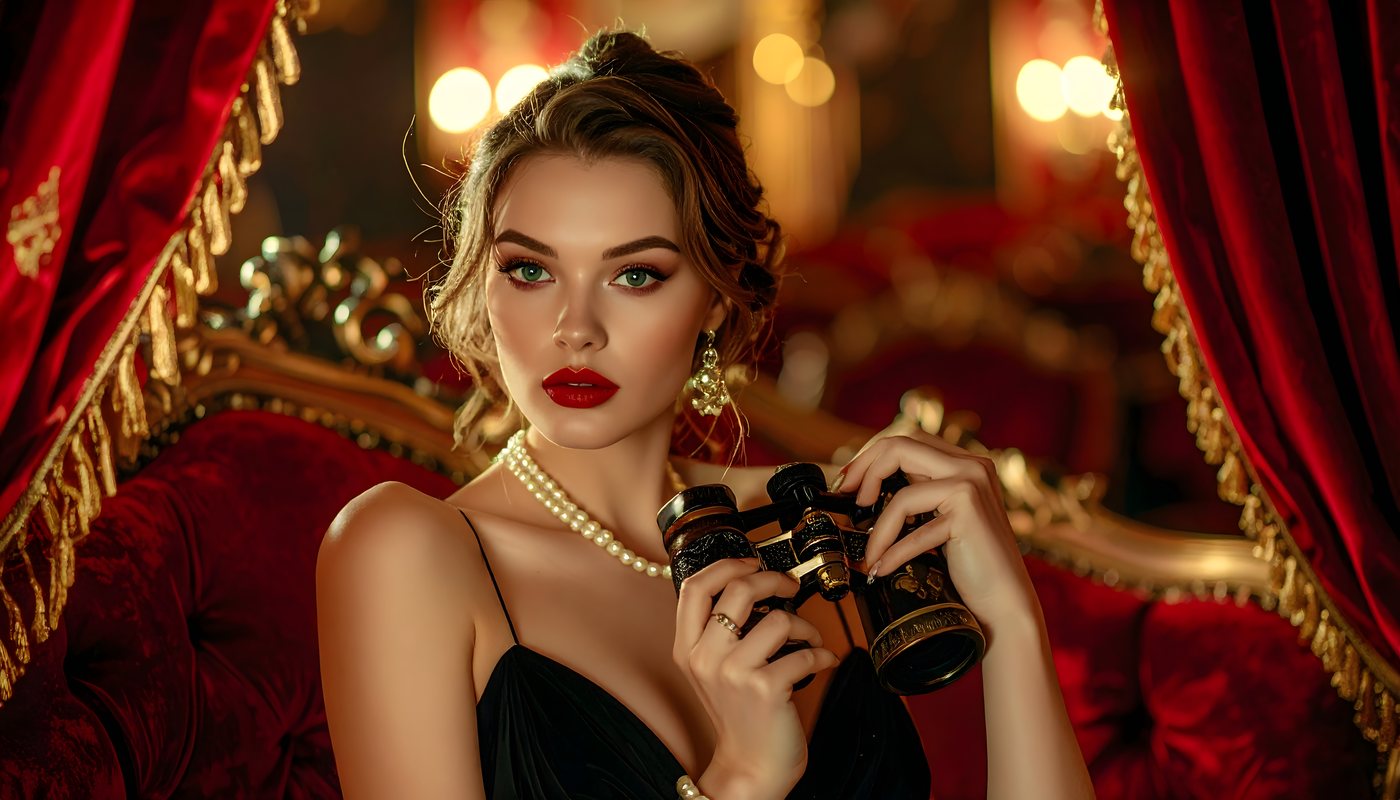
The figure had its final blaze, and its most lavish, in the Paris of the Second Empire. Alexandre Dumas fils coined the word for that world: the demi-monde, the half-world, a parallel society where birth counted for less than nerve and wit. Its queens were called the grandes horizontales, and their legends, which Virginia Rounding disentangled in Grandes Horizontales5, kept the whole of Europe in conversation.
La Païva, born Esther Lachmann, raised a mansion on the Champs-Élysées whose onyx staircase astonished her era. Cora Pearl, English by birth, reigned through extravagance and repartee. Apollonie Sabatier, whom her friends called La Présidente, kept a salon where Baudelaire, Gautier and Flaubert gathered; Baudelaire dedicated some of his finest poems to her. In the Belle Époque, La Belle Otero and Liane de Pougy raised rivalry to the rank of a fine art; the latter ended her days a woman of letters and a princess. None of them marked the imagination like Marie Duplessis, dead at twenty-three in 1847. Dumas fils, who had loved her, made her into La Dame aux camélias, and Verdi, a few years later, into the Violetta of La Traviata. Zola's Nana supplied the dark counterpoint: power without the grace.
That world shone with every light it had, and it was burning through its final hours. The century ahead would make the courtesan unnecessary, for the happiest of reasons.
What Remains
In the twentieth century, women claimed, one by one, the places from which they had been kept: the universities, the professions, public speech, the governance of their own lives. The monopoly that had made the courtesan dissolved; her exception became the rule, and the figure faded without a sound. It would be wrong to read that as defeat. It is surely the happiest disappearance in this whole history, because it meant that a free and cultivated woman no longer needed a separate status in order to exist.
One ideal, however, did not go out with her: companionship as an art. A presence that carries an entire evening without anyone glancing at the time; conversation that surprises; culture worn lightly; absolute discretion. That inheritance survives today, transformed, in companionship of the highest standing: we described what it has become in What Is a High Class Escort, and what is most precious within it in What Is the Girlfriend Experience.

Not everything survived, and so much the better. Discretion, for one, has changed sides: the courtesan lived in full daylight while the wife lived in shadow; today it is the encounter that is sheltered, and the freedom that goes without saying. Above all, today's escort depends on no protector, owes her freedom to no one and makes no career of it: cultivated by inclination, occasional by choice, she accepts an invitation because the prospect appeals to her. What has crossed the centuries is the essential part: the idea that an evening can be a work of art, and company a true one.
If that conception of companionship speaks to you, write to us: it has been ours for many years.
References
- "Courtesan," Online Etymology Dictionary. etymonline.com
- James Davidson, Courtesans and Fishcakes: The Consuming Passions of Classical Athens, HarperCollins, 1997. harpercollins.co.uk
- Margaret F. Rosenthal, The Honest Courtesan: Veronica Franco, Citizen and Writer in Sixteenth-Century Venice, University of Chicago Press, 1992. press.uchicago.edu
- Cecilia Segawa Seigle, Yoshiwara: The Glittering World of the Japanese Courtesan, University of Hawai'i Press, 1993. uhpress.hawaii.edu
- Virginia Rounding, Grandes Horizontales: The Lives and Legends of Four Nineteenth-Century Courtesans, Bloomsbury, 2003. archive.org